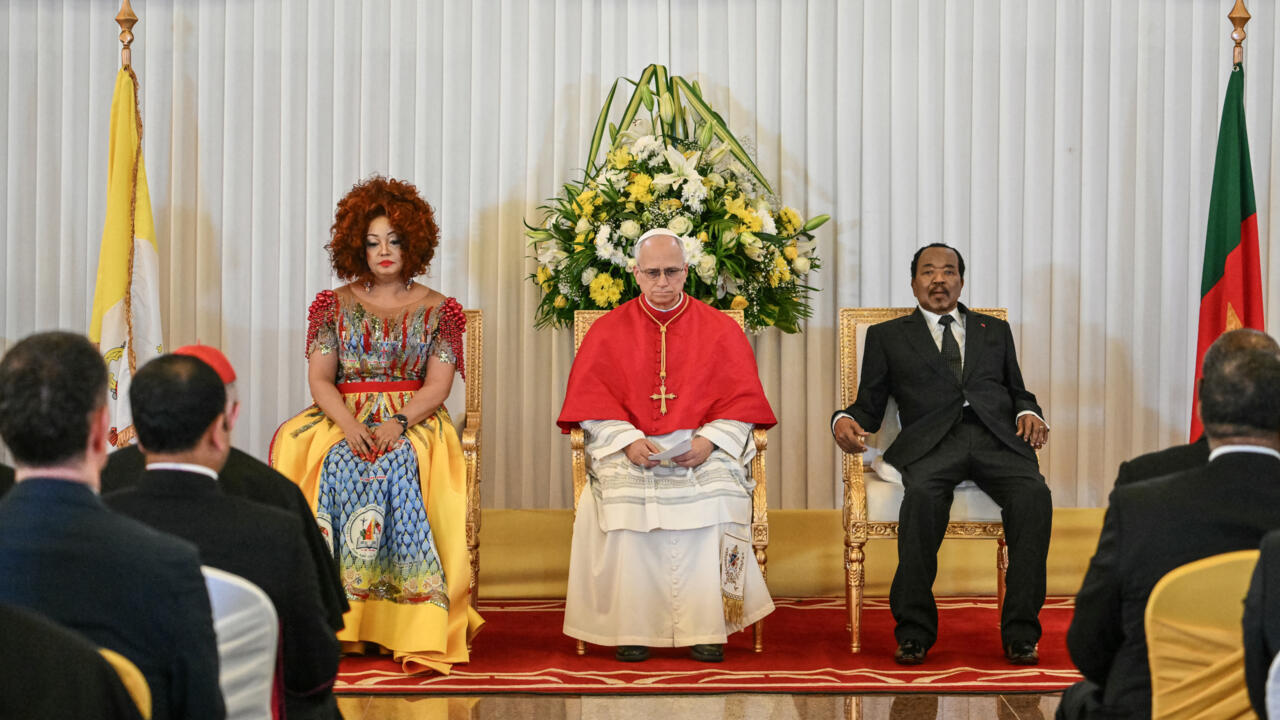
Analysis by the international president of WILPF following Pope Leo XIV's speech to the Authorities, Civil Society and the Diplomatic Corps, at the Unity Palace in Yaoundé.
A message that goes beyond the Cameroonian context
The speech delivered by Pope Leo XIV in Yaoundé, before authorities, civil society, and the diplomatic corps, deserves particular attention far beyond Cameroon’s borders. It is not merely a diplomatic or spiritual intervention. It is a clear, lucid, and courageous call for genuine peace, grounded in justice, human dignity, and collective responsibility.
Through his words, the Holy Father recalls an essential truth: peace cannot be reduced to the silence of weapons or the temporary absence of tensions. Lasting peace is built on credible institutions, on truly listening to citizens, on respect for human rights, and on leaders’ capacity to serve the common good rather than particular interests.
To govern is to serve
When he states that governing does not mean dominating but serving, he echoes a conviction our organization has upheld for more than a century: just governance is a pillar of conflict prevention. Where corruption thrives, where exclusion takes hold, where populations feel neither heard nor respected, frustrations grow and crises feed themselves.
The Pope thus reminds us that authority derives its legitimacy only from service, integrity, and the pursuit of the common good.
Putting people back at the center of crises
Pope Leo XIV also had the merit of naming the concrete suffering caused by violence: lives lost, families displaced, children deprived of schooling, and young people deprived of a future. Behind every statistic, there are faces, stories, and wounded hopes.
This humanization of public debate is essential. Too often, crises are described in numbers, whereas they must be viewed at a human level.
A disarmed and disarming peace
I wish to strongly emphasize his call for a disarmed and disarming peace. This expression reflects a demanding vision of security: one that is based neither on fear nor on threat, but on trust, empathy, and justice.
It aligns with WILPF’s historic commitments to disarmament, violence prevention, and the peaceful transformation of conflicts.
Women as pillars of peace
Another central message of this address concerns the place of women. The Holy Father recalls that they are often among the first victims of violence, while remaining tireless agents of peace.
This recognition is fundamental. In many contexts, women ensure local mediation, rebuild social ties, protect families, and keep community hope alive. Their voices must be fully recognized in all decision-making processes.
Investing in youth to prevent crises
I also welcome the attention given to youth. When young people face unemployment, exclusion, and a lack of prospects, frustration can become fertile ground for violence, forced migration, or destructive paths.
Investing in education, training, and youth entrepreneurship is not a secondary policy: it is a strategic choice for peace and for the future of nations.
Civil society as a vital force for cohesion
The Yaoundé speech also recognizes civil society as a vital force for national cohesion. This statement is crucial.
Women’s organizations, youth groups, trade unions, humanitarian NGOs, and traditional and religious leaders often play a decisive role when tensions arise. They support displaced persons, assist victims, create spaces for dialogue, and build mediation where institutions sometimes struggle to reach communities.
In Cameroon as elsewhere, no lasting peace can be imposed from above. It must be built with the people, with communities, with women, with youth, and with all active forces committed to the common good.
Transparency, rule of law, and public trust
Finally, this speech reminds us of a universal moral requirement: public authority must be a bridge and never a factor of division.
Transparency, the rule of law, and integrity are not institutional luxuries. They are the very foundations of public trust.
Turning words into commitments
The message delivered in Yaoundé therefore goes beyond the Cameroonian context. It speaks to all societies facing distrust, social fractures, or governance crises. It reminds us that true peace is built with patience, courage, and justice.
Our collective responsibility is now clear: to transform these strong words into concrete, lasting, and measurable commitments.
Turning words into commitments
The message delivered in Yaoundé therefore goes beyond the Cameroonian context. It speaks to all societies facing distrust, social fractures, or governance crises. It reminds us that true peace is built with patience, courage, and justice.
Our collective responsibility is now clear: to transform these strong words into concrete, lasting, and measurable commitments.